
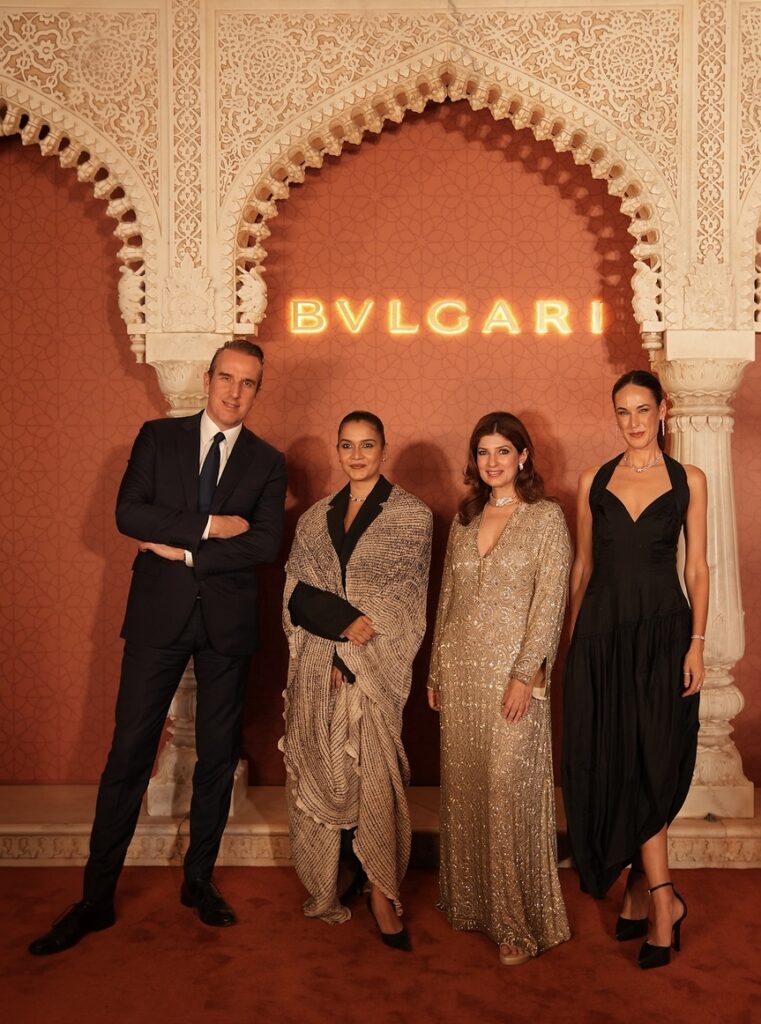
In Jaipur in October 2026, Bvlgari celebrated Diwali around an installation made from 4,500 terracotta elements. In London in 2025, Cartier partnered with Condé Nast Traveller to fill The Dorchester with musicians, actors and entrepreneurs. For Valentino’s festive dinner in Mumbai, guests gathered around a single illuminated table.
Different settings, different guest lists, the same intriguing question: why does a luxury house want to host Diwali rather than simply sell something for it?
The answer lies in what an invitation can offer beyond a transaction. These gatherings place a brand inside its customers’ cultural lives, with food, conversation, craftsmanship and familiar rituals doing some of the work usually left to a campaign. This is an established practice taking several forms, from a collection launch to a community celebration. Its significance is in how each house chooses to participate.
Why the Occasion Matters
“India shops by occasion, not by season,” Reliance Brands head Sumeet Yadav told Vogue Business in October. He linked Diwali to gifting and the significance of buying something new, describing the festive build-up as commercially important for his company.
There is a wider market context. Euromonitor’s September 2025 assessment of Indian luxury goods identified rising disposable incomes, more high-net-worth consumers and an aspirational middle class as demand drivers. It also highlighted younger buyers’ concern with how luxury fits their lifestyles.
Seen against that background, hosting becomes a form of relationship-building. A brand can offer an experience associated with a customer’s own calendar rather than asking that customer to engage only at collection launches. The opportunity is to become a familiar presence on an occasion that already matters to the customer.
Bvlgari Put Indian Makers at the Centre
At the Jaipur Centre for Art, Bvlgari presented Passing the Light, an installation by Doyel Joshi made with the kumhar community and local craftswomen. Its October 13 announcement described 4,500 terracotta elements shaped around the house’s Serpenti scales. Guests included Twinkle Khanna, Joshi and Bvlgari regional managing director Stéphane Larher.
The brand described the initiative as its first global Diwali campaign, supported by a film following the work’s creation. Its stated intention was to make an emotional connection through craft, community and inherited traditions. Here, the Indian collaboration supplied the substance of the event, rather than functioning only as decoration around jewellery.
A London Dinner Can Serve a Different Purpose
On October 10, 2025, Condé Nast Traveller held its Diwali celebration at The Dorchester in partnership with Cartier. The organizer’s account names Divia Thani and Cartier managing director Laurent Feniou as hosts. Guests included Anoushka Shankar, Arooj Aftab and Neelam Gill; chef Chet Sharma supplied the food.
That was a media-brand partnership. Jimmy Choo’s 2025 Jamavar dinner, by contrast, was explicitly tied to a limited-edition capsule. Reliance Brands’ own account identifies creative director Sandra Choi and brand ambassador Princess Gauravi Kumari as co-hosts.
The distinction matters. A festive guest list can support a collection launch or bring a brand into an existing cultural network. Calling every gathering the same kind of marketing overlooks who organized it and what it was actually designed to do.
The Test Is What the Brand Contributes
For Valentino’s Mumbai Diwali dinner, production company RH Experience describes an illuminated communal table and terracotta work made with Dharavi artisans at Nilaya Anthology. The setting connected the house’s visual identity with locally made objects, giving the dinner a tangible craft component.
Together, these examples suggest a useful test for luxury’s festive hospitality: what remains once the photographs have circulated? A distinctive product, credited creative collaborators and continued relationships give the occasion substance. A famous guest list alone cannot demonstrate those things. The most revealing part of the Diwali invitation is what the brand chooses to bring to the table.
Sources
Bvlgari announcement · Condé Nast Traveller event report · Reliance Brands announcement · Tatler event report · RH Experience event account · Vogue Business interview · Euromonitor market overview