
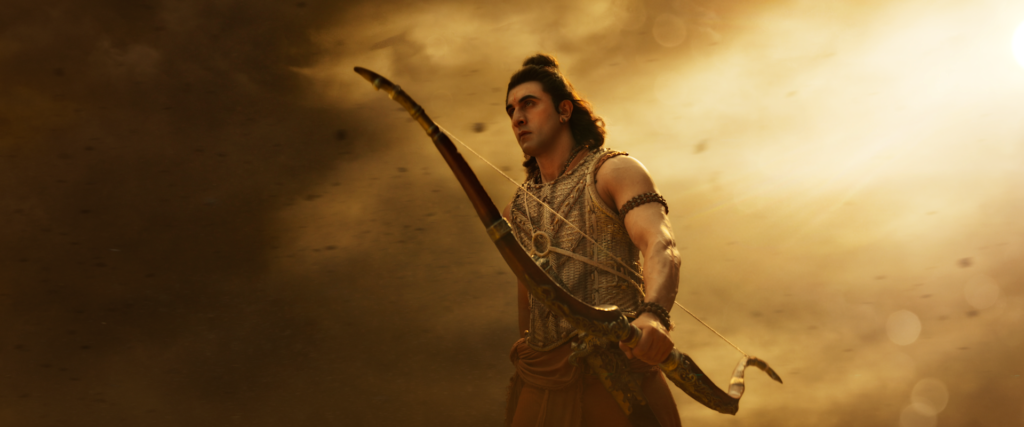
Ramayana carries a specific label on IMAX’s official film page: “Filmed for IMAX”. For anyone comparing tickets ahead of its November 5 release, that wording matters. It describes a production programme involving the filmmakers, rather than simply saying the film will be shown in an IMAX cinema.
Nitesh Tiwari directs the adaptation, with Ranbir Kapoor playing Rama and Yash playing Ravana. DNEG’s October 30 release update confirms a worldwide theatrical launch on November 5, in Hindi, Tamil, Telugu, Kannada, Malayalam and English.
The Camera Is Only the Beginning
IMAX says its programme begins before production and continues through release. Filmmakers can use IMAX film cameras or IMAX-certified digital cameras. The label therefore does not, on its own, establish that a movie was photographed on large-format film stock.
Composition is another part of the process. IMAX describes filmmakers planning for expanded scenes in 1.90:1 or 1.43:1 aspect ratios, followed by collaboration with its post-production team and screen tests.
Those numbers describe a picture’s width relative to its height. A 1.43:1 frame is closer to a square than a 1.90:1 frame. That is a shape difference, not a measurement of the auditorium’s physical size. For a viewer, the relevant question is how the particular film uses that extra vertical space, not simply whether a screen is advertised as large.
What the Label Does Not Settle
The general programme description does not confirm Ramayana’s exact camera model, how much of the film has expanded framing, or the presentation available at every cinema. The official film listing reviewed here does not specify those details. It would be premature to promise an identical image at every IMAX screening.
Nor should a format label be read as a verdict on the film. Casting, performance, storytelling and visual effects still have to work together on screen. The programme explains part of the technical preparation; it cannot substitute for seeing the finished work.
Check the Screening, Not Just the Poster
Before paying for a ticket, check the venue, language, subtitles and advertised presentation in the actual booking listing. If a particular projection system or framing is important to you, look for the cinema’s explicit description rather than assuming it from the film’s publicity.
Ramayana has already held its Los Angeles premiere: DNEG dates the event at the Academy Museum’s David Geffen Theatre to October 27, with Kapoor, Sai Pallavi, Yash and the filmmaking team attending. For the wider audience arriving from November 5, the useful takeaway is simple: “Filmed for IMAX” describes how the film was prepared. Your booking should still tell you what your chosen cinema is offering.