
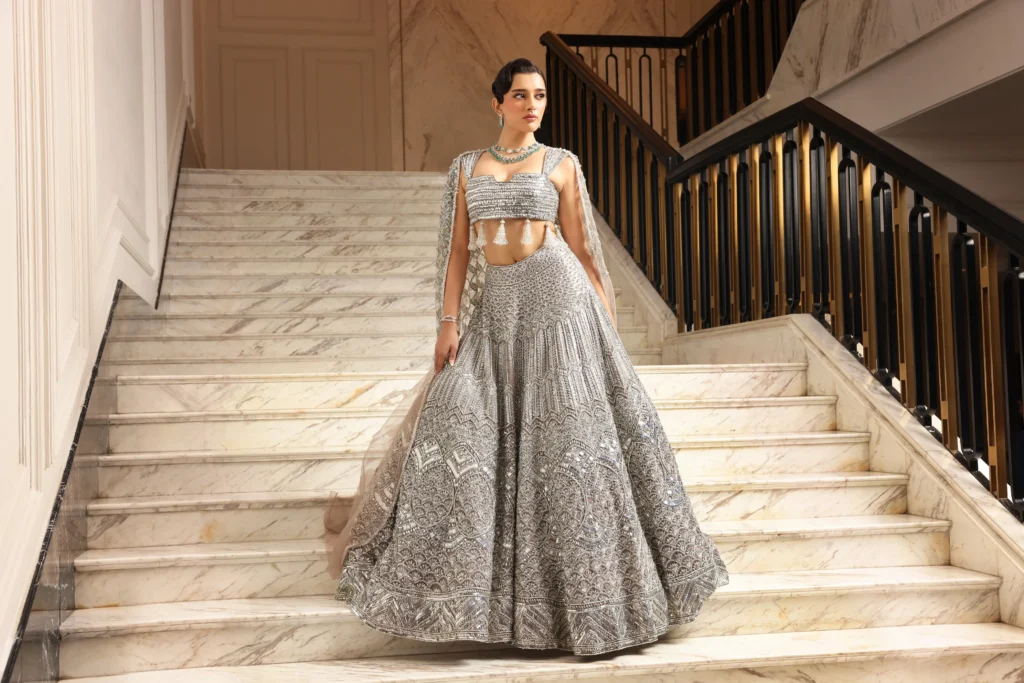
The most interesting thing about a bridal wardrobe isn’t how closely it follows a trend. It’s how clearly it says something about the woman wearing it. Put ten couture houses in the same editorial and that difference becomes visible: red can look romantic or architectural; ivory can feel ceremonial without becoming predictable; a veil can change the entire outline of a look.
That is the fashion conversation worth having around The Great Indian Bride, the opening editorial in the sixth edition of The Great Indian Wedding Book. Photographed by Pravin Talan, styled by Tanya Ghavri and finished with hair and makeup by Shradha Luthra, the shoot brings ten design houses into one visual world. Our reading of the edit is less about declaring one winning look and more about the choices that make each one distinct.
Red still has more to say
Abhinav Mishra’s CRIMSON starts with a familiar bridal colour and gives the surface a particular identity. Inspired by the Rangoon flower, the look combines the house’s mirror work with handcrafted embroidery and floral detailing. The point is not that red needs rescuing. It is that two red bridal outfits need not tell the same story.
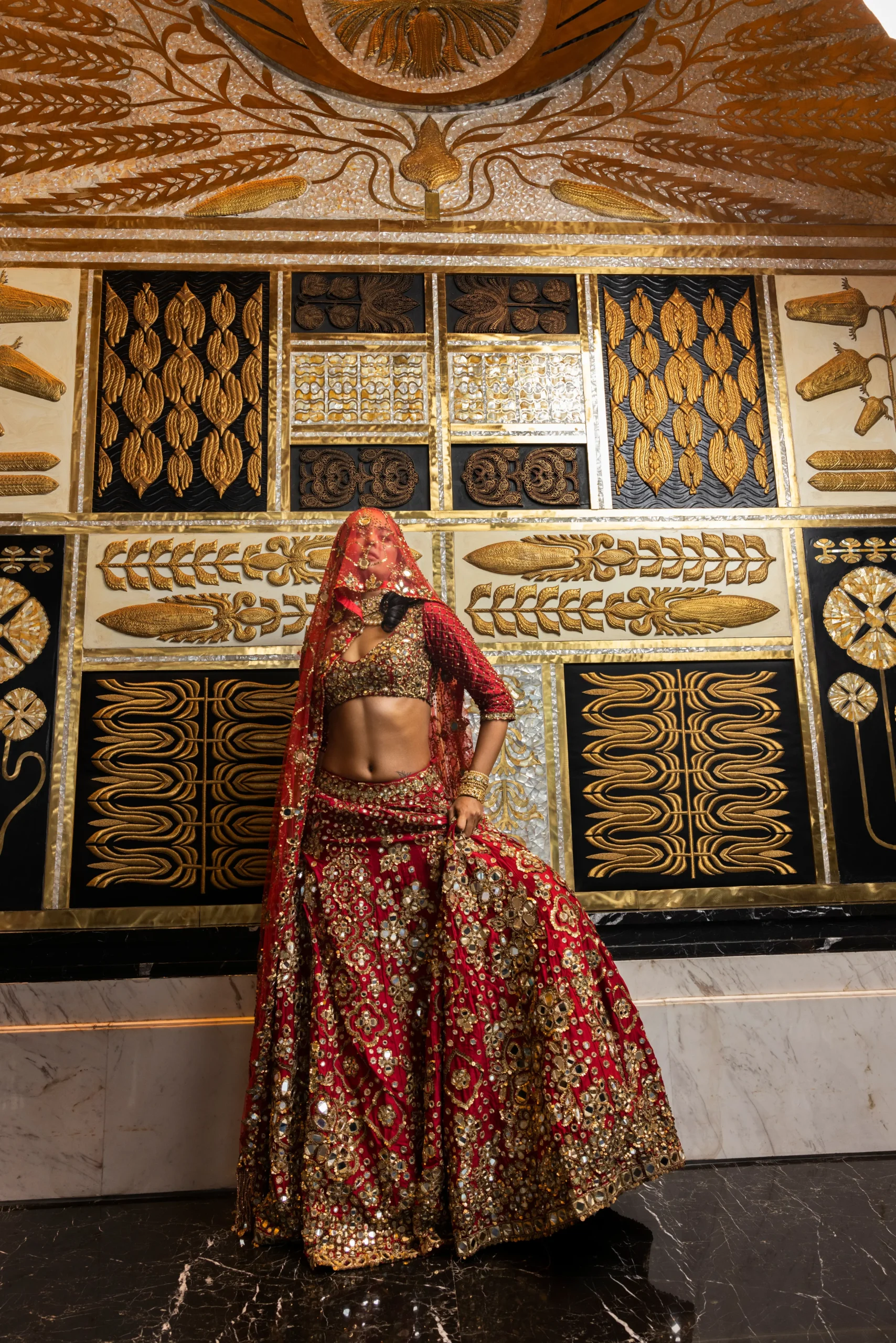
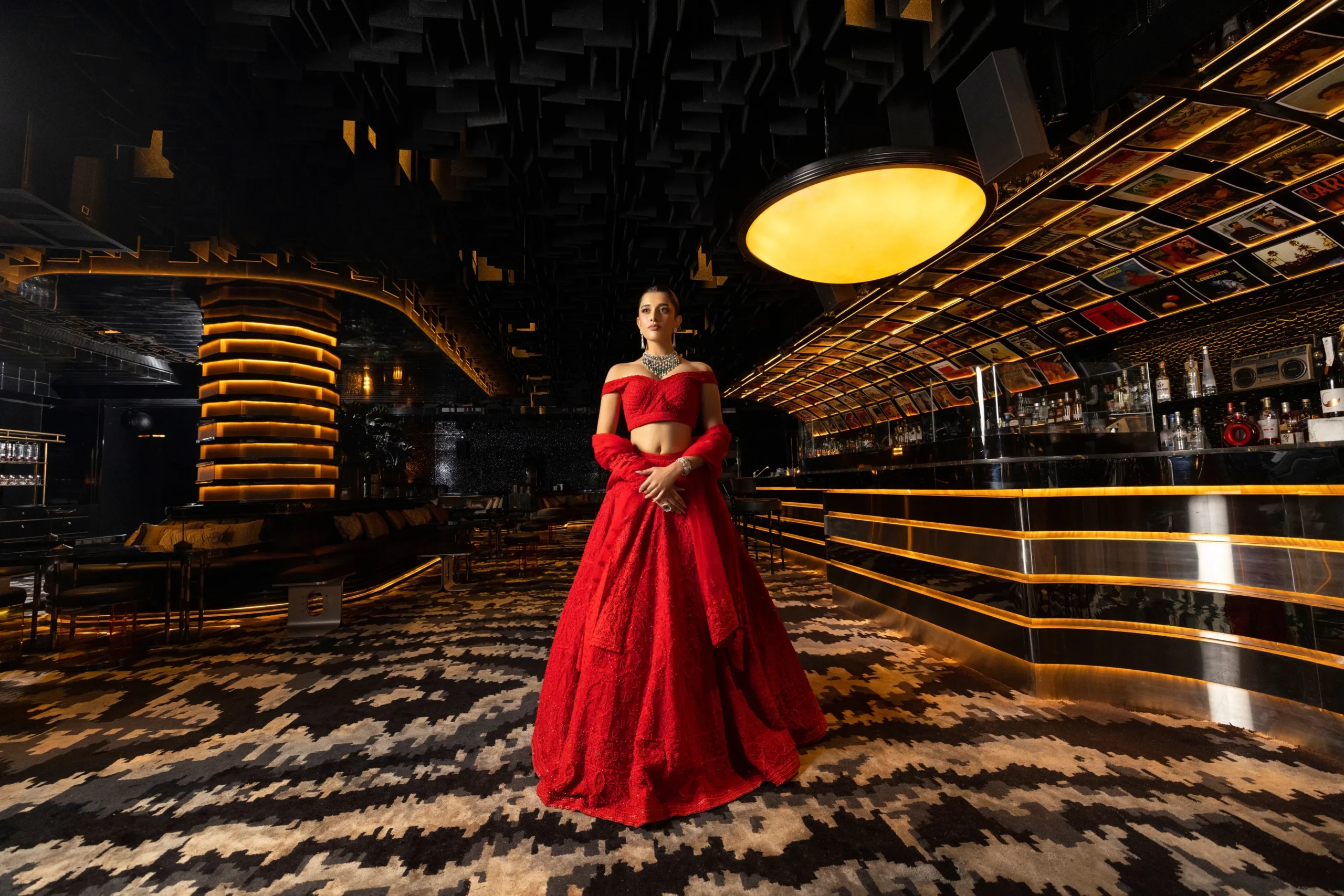
Shantnu Nikhil Couture takes the colour in another direction. Its crimson lehenga from Becoming is described through a sculpted bodice, sweeping proportions and tonal embroidery. Where one approach invites attention to the surface, the other places more emphasis on the outline. For a bride comparing references, that is a useful distinction: decide whether you want the first impression to come from detail, shape or both.
Craft is the statement
Manish Malhotra’s EVARA brings zardozi and zari embroidery into conversation with sculpted silhouettes. The label’s contribution also puts an idea beyond the ceremony into focus: a bridal wardrobe can have a life after its first outing. Malhotra’s advice in the editorial is to choose craftsmanship and pieces whose appeal lasts beyond the wedding day. That shifts the question from how spectacular an outfit looks once to how personally meaningful it remains.
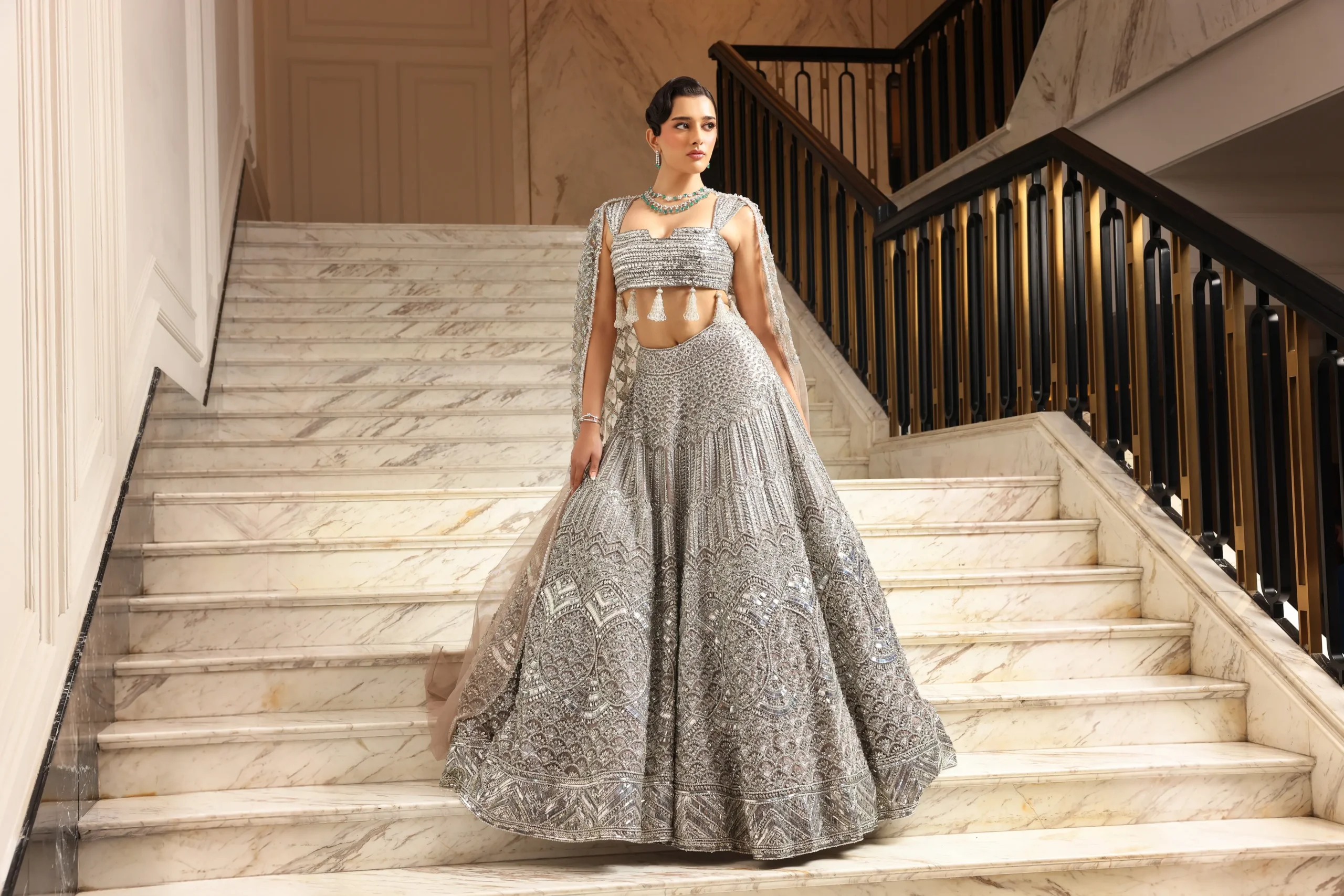
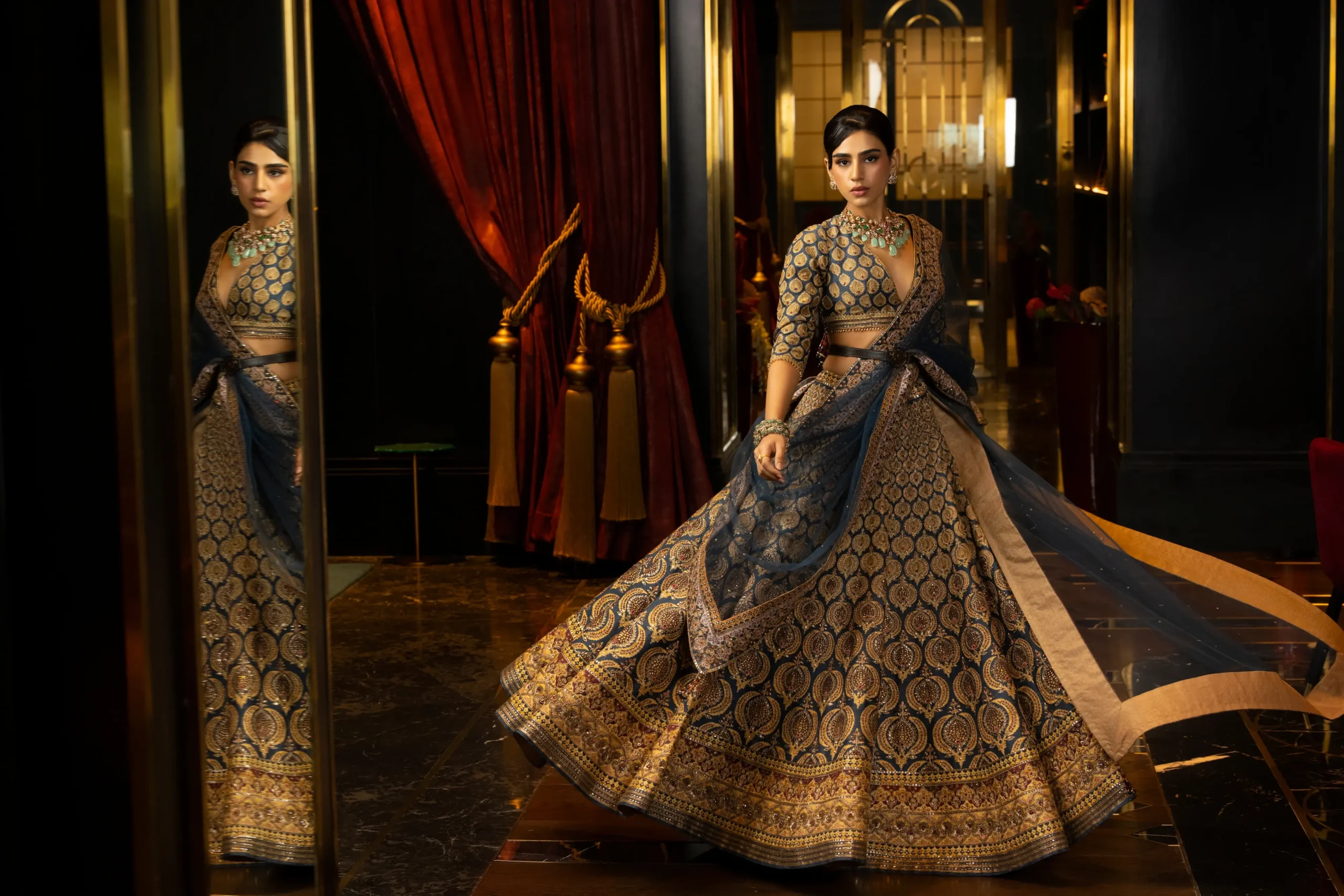
JJ Valaya’s Siddi introduces Indian and African influences. In the designer’s words, the aim was for the collection to feel “rooted without being nostalgic”. That is an interesting proposition for wedding dressing, a space so often shaped by references to the past. Heritage can inform a look without turning it into a reproduction of an older one.
Soft colour, strong presence
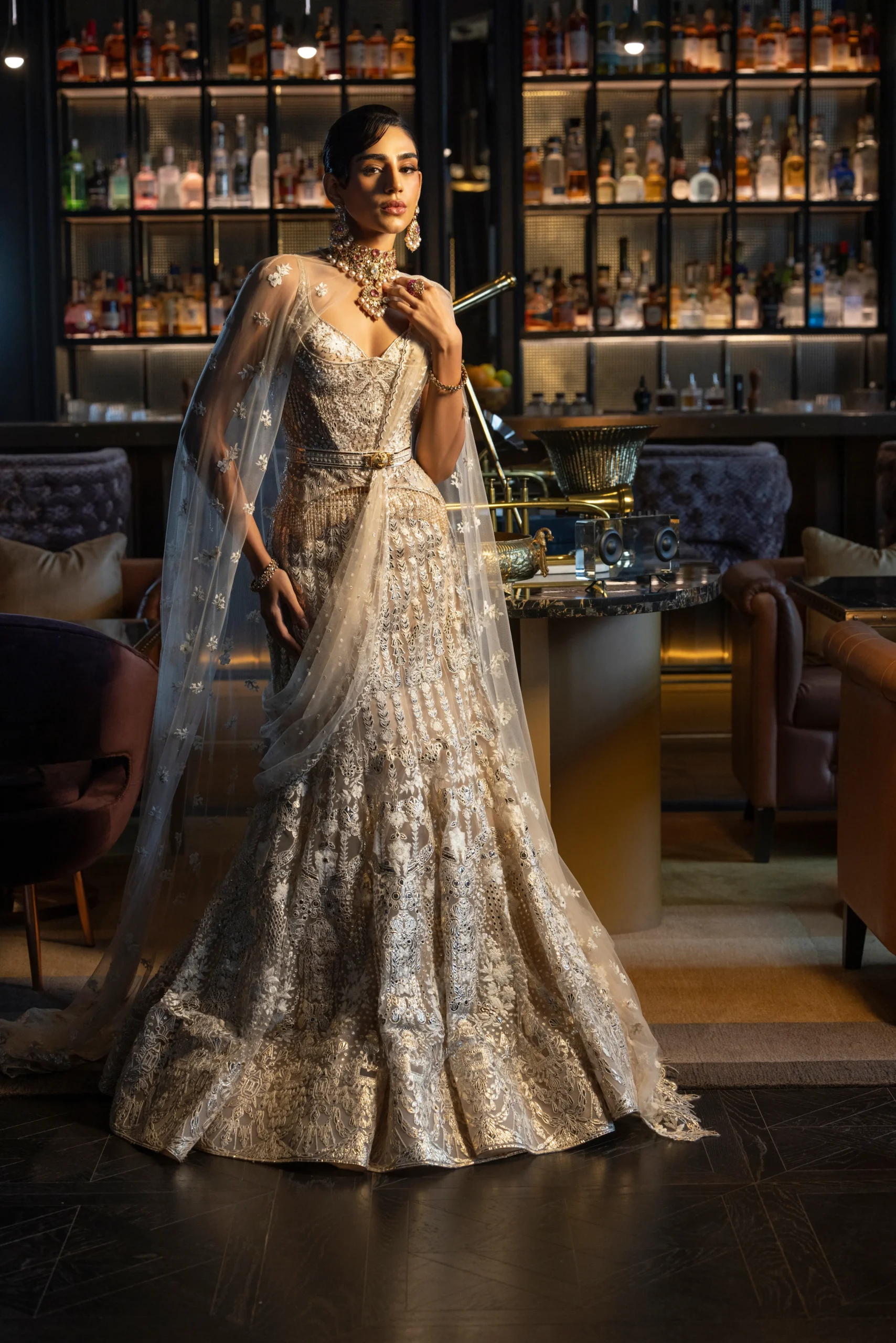
The ivory Falguni Shane Peacock ensemble pairs delicate embroidery with a sheer cape. Its impact comes from the relationship between the embellished outfit and the lighter layer around it. The designers describe a balance between traditional craftsmanship and a modern sensibility. It is a reminder that a softer palette does not have to mean a smaller fashion statement.
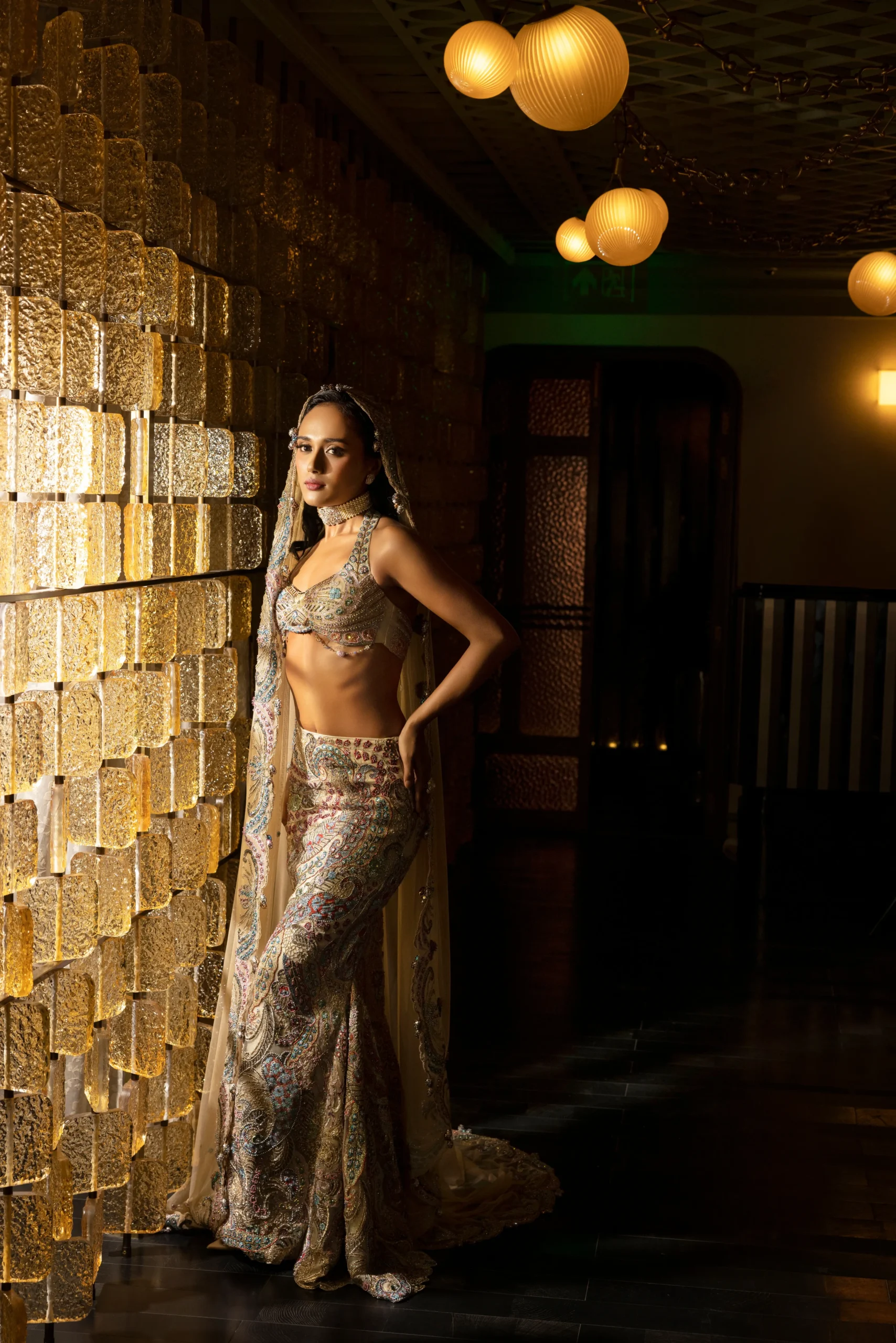
Aisha Rao’s Beatrice, from the Priyasi collection, approaches the idea through a beige appliqué fishtail lehenga and a long veil. Here, silhouette and length become part of the story. The veil is not simply an accessory added at the end; it changes how the ensemble occupies space.
Let the details feel personal
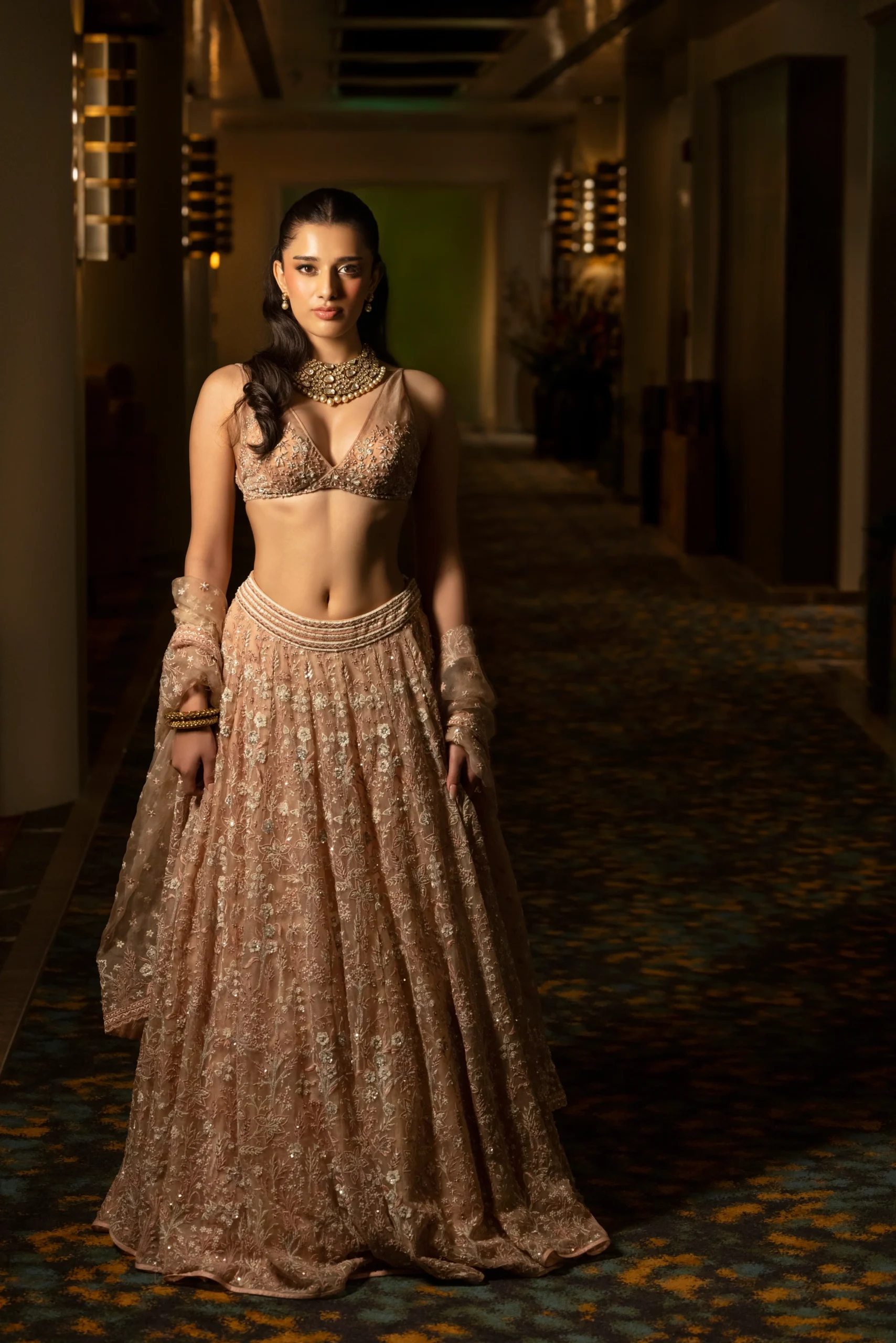
Anita Dongre’s Forest Rose silk lehenga brings together threadwork, zari and sequins, with motifs inspired by a wild rose. Dongre’s advice begins with emotion rather than a checklist of trends. That feels especially relevant to a wardrobe assembled across several celebrations: the strongest reference may be a mood you recognise, rather than a look you feel obliged to recreate.
Ritika Mirchandani’s The Third Path explores the meeting of traditional craft and contemporary form. Her emphasis on individuality and comfort adds a practical test to the visual one. An outfit may look extraordinary in a still photograph, but the person wearing it will also sit, walk, greet guests and move through a long celebration. Those are part of the styling brief, not an afterthought.
Metallics, without a single formula
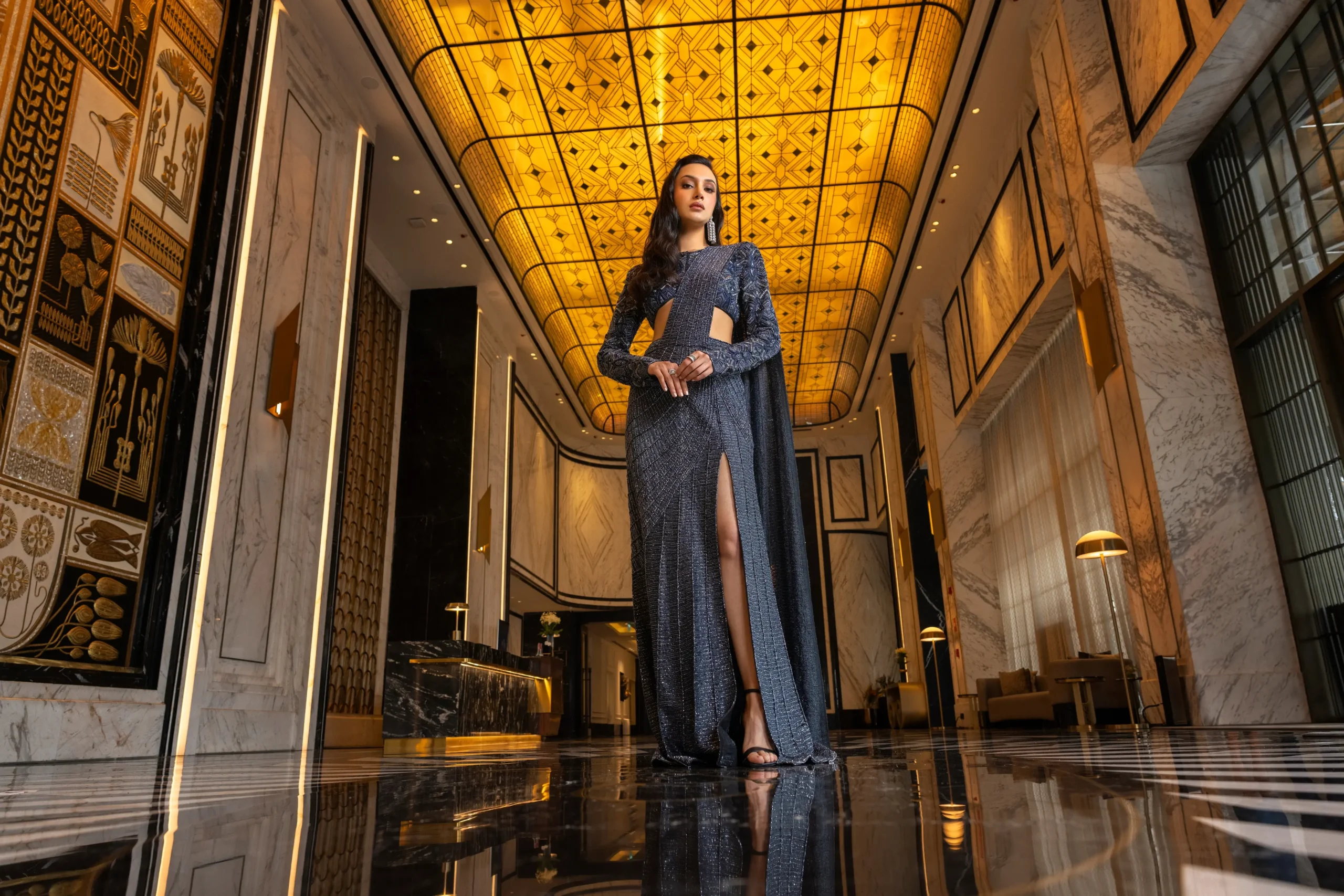
Amit Aggarwal makes the outline itself an event. In the photographed look, a pale metallic, close-fitting silhouette is interrupted by repeating leaf-shaped loops around the bodice and hips. Those raised forms give the eye something to follow beyond the overall shine. The result reads as sculptural without relying on a wide skirt to create drama.
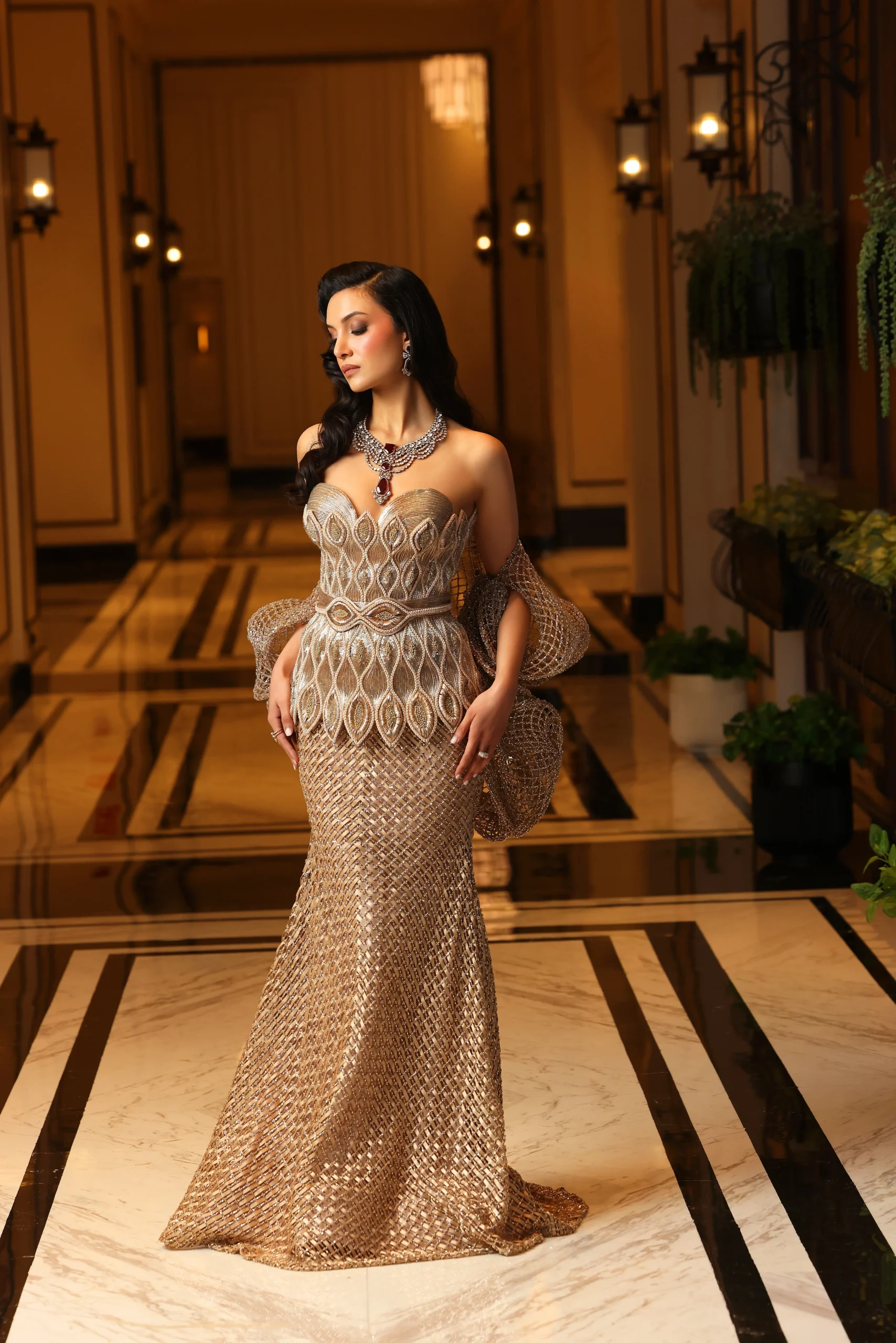
Itrh goes in the opposite direction with volume. A fitted, embellished bodice meets a generous gold-toned skirt, while a veil frames the head and continues the line of the look. The contrast with Aggarwal is the point: a metallic palette can support quite different personalities. One is drawn around the body; the other expands into the space around it.
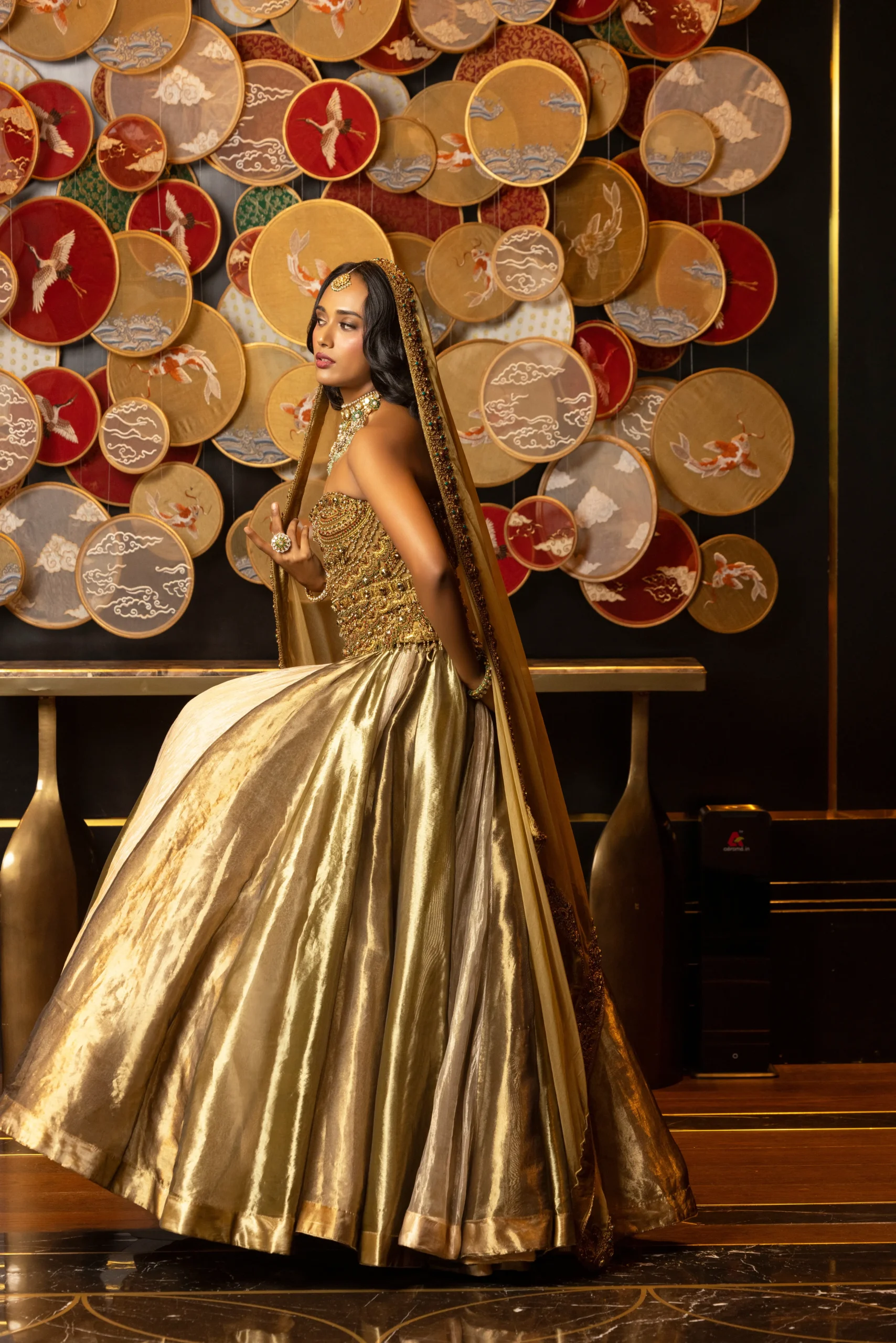
Behind the Looks
Pravin Talan: building the visual world
For photographer Pravin Talan, the setting is part of the fashion story. His approach connects the woman and her clothes with the architecture around her.
“This shoot was about making a lifestyle statement fusing the elements of high-fashion, bridal couture and ultra-modern sleek spaces,” he says. “The goal was to build visual stories around today’s young, confident women in urban settings, and the incredible scale and architecture of the Fairmont provided the perfect backdrop to bring that alive. I worked on setting the mood, the lighting, and capturing the moments where this character comes alive.”
Tanya Ghavri and Shradha Luthra: bringing the looks together
Stylist Tanya Ghavri describes the thread connecting the different design houses: “The styling was imagined as a modern, cinematic take on Indian bridal couture. Each look was designed to tell a different story while feeling part of one world.”
Hair and makeup artist Shradha Luthra places the emphasis on balance: “For me, hair and makeup are always about bringing cohesiveness to the entire look. It’s about knowing how much to do and where to stop, rather than going overboard with any one element.”
The clothes do not work alone. Talan uses Fairmont Mumbai’s expansive interiors to connect bridal couture with an urban architectural setting. Ghavri’s styling considers jewellery, draping and the balance between an outfit and its accessories. Luthra’s beauty direction aims for cohesion rather than allowing any one element to overwhelm the whole look.
That collaboration is what makes the editorial useful beyond a designer roll call. Our takeaway is to build a wardrobe around a few deliberate decisions: the silhouette you connect with, the craft you want to foreground, and the feeling you want each look to carry. Ten houses offer ten starting points. The final point of view still belongs to the bride.
Credits: Photography: Pravin Talan. Styling: Tanya Ghavri. Hair and makeup: Shradha Luthra. Location: Fairmont Mumbai. Images courtesy of The Great Indian Wedding Book.
Editorial note: This Famous TV feature is adapted from The Great Indian Wedding Book’s publisher-supplied material released on 8 October 2026. Famous TV and The Great Indian Wedding Book are under common ownership.