
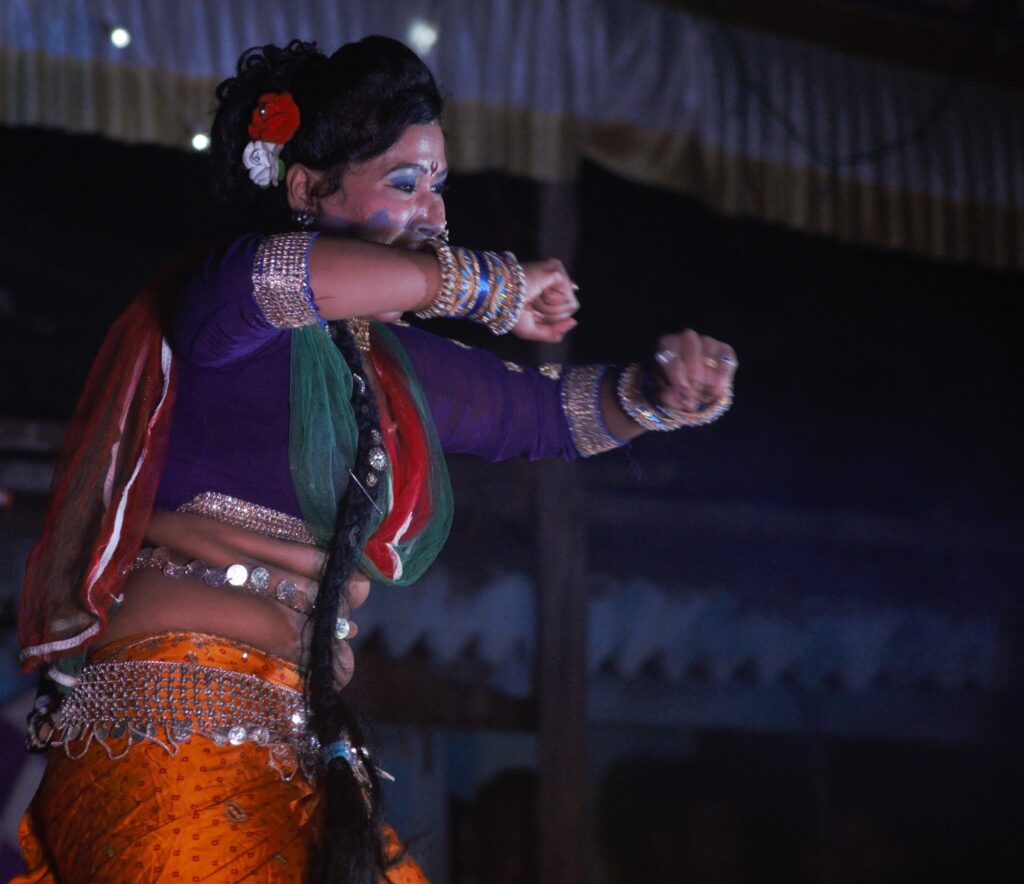
Shraddha Kapoor’s Eetha turns the spotlight on the life of Vithabai Narayangaonkar. Directed by Laxman Utekar, the film draws on the story of the Marathi Tamasha and Lavani performer. The project offers a reason to look beyond the familiar screen image of a dancer and understand the performance tradition around her.
Lavani and Tamasha are connected, but distinct
Lavani brings together song and expressive performance. Tamasha is the wider theatrical setting in which music, dance and dramatic entertainment come together. Treating the two words as interchangeable loses some of that distinction: a memorable dance passage is part of a larger world of performers, repertory and audience relationships.
The Maharashtra government’s historical account of the performing arts describes Lavani’s relationship with Tamasha and its development into other performance settings, including baithakichi Lavani. That history is a useful reminder that the form cannot be reduced to a single costume, gesture or film sequence. Its songs and ways of presenting them have changed across settings and generations.
The people beyond the spotlight
Field reporting by the People’s Archive of Rural India offers a particularly concrete picture of the labour behind a troupe. In its October 2017 account of Mangala Bansode’s company, the organisation documented a workforce that included artists alongside drivers, wiremen, managers, cooks and other workers. Those observations belong to that reporting period, rather than a current headcount.
Bansode is Vithabai’s daughter. PARI recorded that she began performing in her mother’s troupe as a child and later established a company with her husband. Her story connects the celebrated individual to a continuing family and professional tradition. It also shifts attention towards the organisation, travel and work that make a performance possible.
For viewers discovering this world through Eetha, that context matters. A biographical film is a dramatized interpretation, while the history of Lavani and Tamasha extends across many artists and communities. Watching for the songs, the performers and the collective work behind the stage gives the cinema conversation more depth than treating the tradition simply as an attractive backdrop.
Explore further: read PARI’s field reporting alongside the film’s official material to meet the people behind the performance tradition.
Sources and further reading
Sources: Famous TV’s Instagram coverage.